https://www.cdeide.com/the-ultimate-guide-to-sports-injury-rehabilitation-and-exercise-recovery/
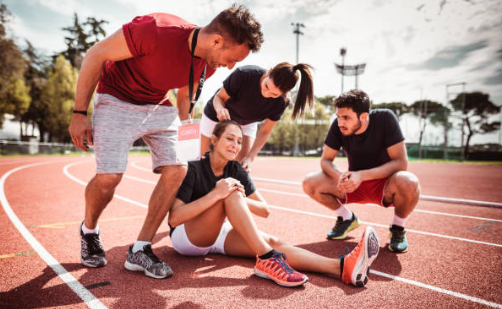
Running, as a simple and popular sport, has brought health and happiness to countless enthusiasts. However, long-term or incorrect running methods can also easily cause various injuries and troubles for running enthusiasts. Understanding the causes of these common injuries and mastering effective exercise rehabilitation methods is crucial for every running enthusiast.
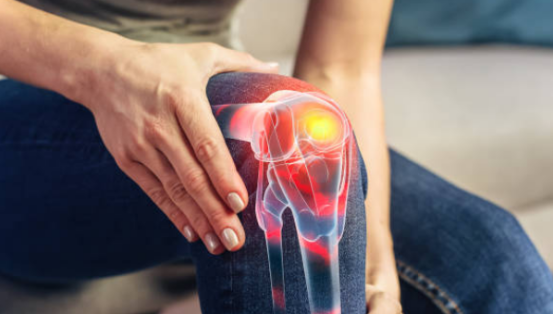
knee pain
Cause analysis
Knee pain is a very common problem among running enthusiasts. Among them, patellofemoral joint pain syndrome is more common, which is usually caused by excessive pressure on the patella joint during running. For example, excessive running distance, sudden increase in running intensity, and incorrect running posture, such as internal or external BaZi, can change the force distribution of the patella joint, leading to cartilage wear and causing pain. In addition, insufficient quadriceps strength cannot effectively stabilize the knee joint and increases the risk of knee injury. During running, the quadriceps muscle is responsible for stretching the knee joint. If its strength is weak, the knee joint is prone to instability during exercise, which can damage the joint cartilage and surrounding tissues.
Sports rehabilitation methods
Quadriceps strength training: Perform straight leg lifting exercises, lie flat on the bed, straighten both legs, slowly raise the affected leg to a 30-45 degree angle with the bed surface, hold for 5-10 seconds, and then slowly lower it. Repeat 10-15 times per group, 3-4 sets per day. As the strength increases, an appropriate amount of sandbags can be tied around the ankle to increase the training intensity. In addition, squatting against the wall is also an effective way to exercise the quadriceps. Stand with your back against the wall, feet shoulder width apart, slowly squat down so that your thighs are parallel to the ground and your knees do not exceed your toes. Maintain this position for 30-60 seconds, rest for a moment, and repeat. Repeat 3-5 sets per day.
Knee joint range of motion training: Sit on a chair, straighten your legs, slowly lift the affected foot, hold your toes with your hand, gently pull towards your body, feel the extension of the back of your calf and knee joint, hold for 15-30 seconds, then relax and repeat 10-15 times. Knee joint flexion and extension exercises can also be performed. Sitting by the bed, legs naturally droop, slowly bend the knee joint, try to bring the heel close to the buttocks, and then slowly straighten it. Repeat 10-15 times per group, 3-4 sets per day.
Adjust running posture: During the running process, keep your body upright, slightly lift your head, and keep your eyes level ahead. The arm swings naturally and coordinates with the leg movements. Moderate pace, not too big or too small, to avoid excessive pressure on the knees due to excessive strides. At the same time, try to keep the middle of the foot on the ground and reduce the impact force brought by the heel or toe landing. You can observe your posture by running at low speed on a treadmill, or seek guidance and correction from a professional coach.
Plantar Fasciitis
Cause analysis
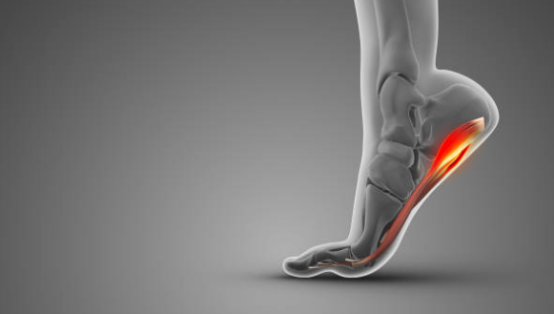
Plantar fasciitis is caused by repeated traction of the plantar fascia, resulting in minor tears and inflammation in the local area. Running enthusiasts who run on hard surfaces for long periods of
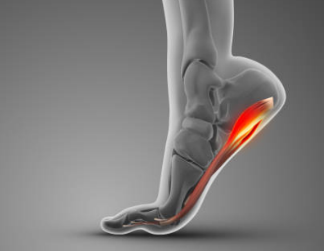
time, or running shoes with insufficient cushioning performance that cannot effectively absorb the impact force generated during running, can easily cause plantar fasciitis. In addition, being overweight can also increase the burden on the plantar fascia, as the larger the weight, the greater the pressure on the plantar fascia during running. In addition, without sufficient warm-up exercises before running, the plantar fascia may suddenly enter a high-intensity exercise state, which can also be easily damaged.
Sports rehabilitation methods
Plantar fascia stretching: Stand barefoot at the edge of the steps, with the forefoot stepping on the steps and the heel hanging in the air. Slowly press down on the heel, feel the stretch of the plantar fascia, hold for 15-30 seconds, then relax and repeat 10-15 times. You can also use sitting posture stretching, sitting on a chair, placing the affected foot on the opposite thigh, holding the toe with your hand, pulling upwards, holding for 15-30 seconds, repeating 10-15 times. You can also use tennis or golf balls, place the ball on the sole of the foot, roll it slowly, and massage the plantar fascia for 3-5 minutes each time, 2-3 times a day.
Calf muscle strength training: Perform heel lifting exercises, stand with both feet shoulder width apart, slowly lift the heels as high as possible, hold for 2-3 seconds, and then slowly lower them. Repeat 15-20 times per group, 3-4 sets per day. As the strength increases, you can try practicing heel lifting with one foot to further enhance the strength of the calf muscles. In addition, you can also stretch the muscles on the back of your calves. Stand up with your feet shoulder width apart, take one step backwards with the affected foot, straighten your knees, lean forward, and stretch your hands forward to feel the stretch on the back of your calves. Hold for 15-30 seconds and then switch to the other side, repeating 10-15 times.
Choose suitable running shoes: Choose running shoes with good cushioning performance and arch support. Running shoes with good cushioning performance can effectively absorb the impact force during running and reduce the burden on the plantar fascia. Arch support can help maintain the normal structure of the sole and reduce excessive tension on the plantar fascia. When purchasing running shoes, it is best to go to a professional sports store and have the staff recommend them based on your foot shape and running habits. At the same time, attention should be paid to the wear and tear of running shoes. Generally, the cushioning performance of running shoes will significantly decrease after 500-800 kilometers of use. At this time, running shoes should be replaced in a timely manner.
Achilles tendonitis
Cause analysis
Tendonitis is usually caused by repeated excessive tension on the Achilles tendon, leading to
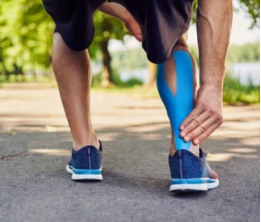
damage and inflammation of the Achilles tendon tissue. Running enthusiasts experience a significant increase in pressure on their Achilles tendon during speed training or hill climbing exercises. If the training intensity is too high and the frequency is too high, exceeding the capacity of the Achilles tendon, it is easy to cause Achilles tendinitis. In addition, the heel of running shoes that is too high or too low can change the stress on the Achilles tendon and increase the risk of Achilles tendon injury. For example, wearing running shoes with excessively high heels can cause the Achilles tendon to be in a relatively shortened state, making it more susceptible to tensile injuries during running.
Sports rehabilitation methods
Achilles tendon stretching: Stand with both feet shoulder width apart, lift the heel of the affected foot as far back as possible, hold for 15-30 seconds, then relax, repeat 10-15 times. You can also use the wall for stretching, stand facing the wall, support the wall with both hands, spread your feet forward and backward, place the affected foot behind, straighten your knees, lean forward, feel the stretch of your Achilles tendon, hold for 15-30 seconds, then switch to the other side and repeat 10-15 times. When stretching the Achilles tendon, it is important to apply moderate force to avoid secondary injury caused by excessive stretching.
Calf muscle strength training: Similar to plantar fasciitis calf muscle strength training, heel lifting exercises can effectively enhance calf muscle strength and reduce the burden on the Achilles tendon. In addition to lifting the heels with both feet, it is also possible to gradually transition to single foot heel lifting exercises to increase the difficulty of training. At the same time, eccentric contraction training of calf muscles, such as slow tiptoe movements on steps, is also helpful for the rehabilitation of Achilles tendinitis. Standing at the edge of the steps, with the forefoot of both feet stepping on the steps and the heel suspended, slowly lower the heel until it is below the level of the steps, and then slowly lift the heel. Repeat 10-15 times per group, 3-4 times a day.
Adjust training plan: During the rehabilitation of tendinitis, it is necessary to reduce the intensity and frequency of running appropriately, and avoid speed training and climbing training. You can choose some low impact exercises, such as swimming, cycling, etc., to maintain the body’s movement state without causing excessive pressure on the Achilles tendon. After the symptoms of tendinitis are relieved, gradually resume running training, but pay attention to gradual progress, gradually increasing the training intensity and time.
Running enthusiasts should not panic when facing common injuries. Through scientific and reasonable exercise rehabilitation training, combined with correct daily care and training adjustments, most injuries can be effectively relieved and recovered. I hope every running enthusiast can enjoy the fun of running while maintaining a healthy body.
https://www.cdeide.com/the-ultimate-guide-to-sports-injury-rehabilitation-and-exercise-recovery/